How a Netflix documentary led to resurrecting a 9/11 memorial
A few weeks ago, Jess and I were sitting on the couch and pulled up Secret Mall Apartment. It's a fun documentary about some artists in Providence, Rhode Island who discovered unused space inside a new mall development. Over several years, they secretly snuck in furniture, video games, and even building materials to convert it into a fully functional apartment.
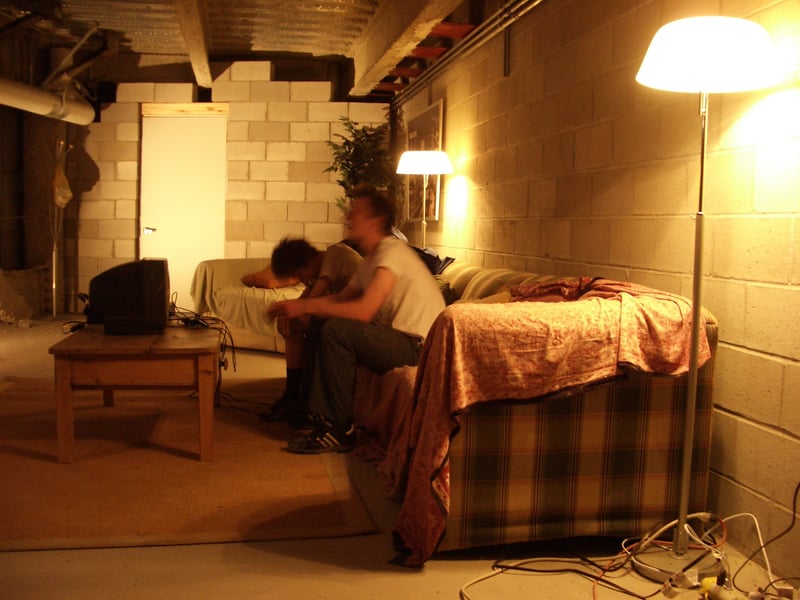
The movie mostly focused on the apartment saga, but it also highlighted the artists' other projects. We were particularly inspired by their work in children's hospitals, creating temporary drawings with tape in patients' rooms, hallways, and waiting areas. Kids and their families could request drawings and help make them. Over 17 years, Tape Art made more than 1,000 drawings at their local children's hospital.
The film also introduced us to their 9/11 memorial, The Eleventh of September. When I went looking for the website documenting it, I found that it had gone offline.
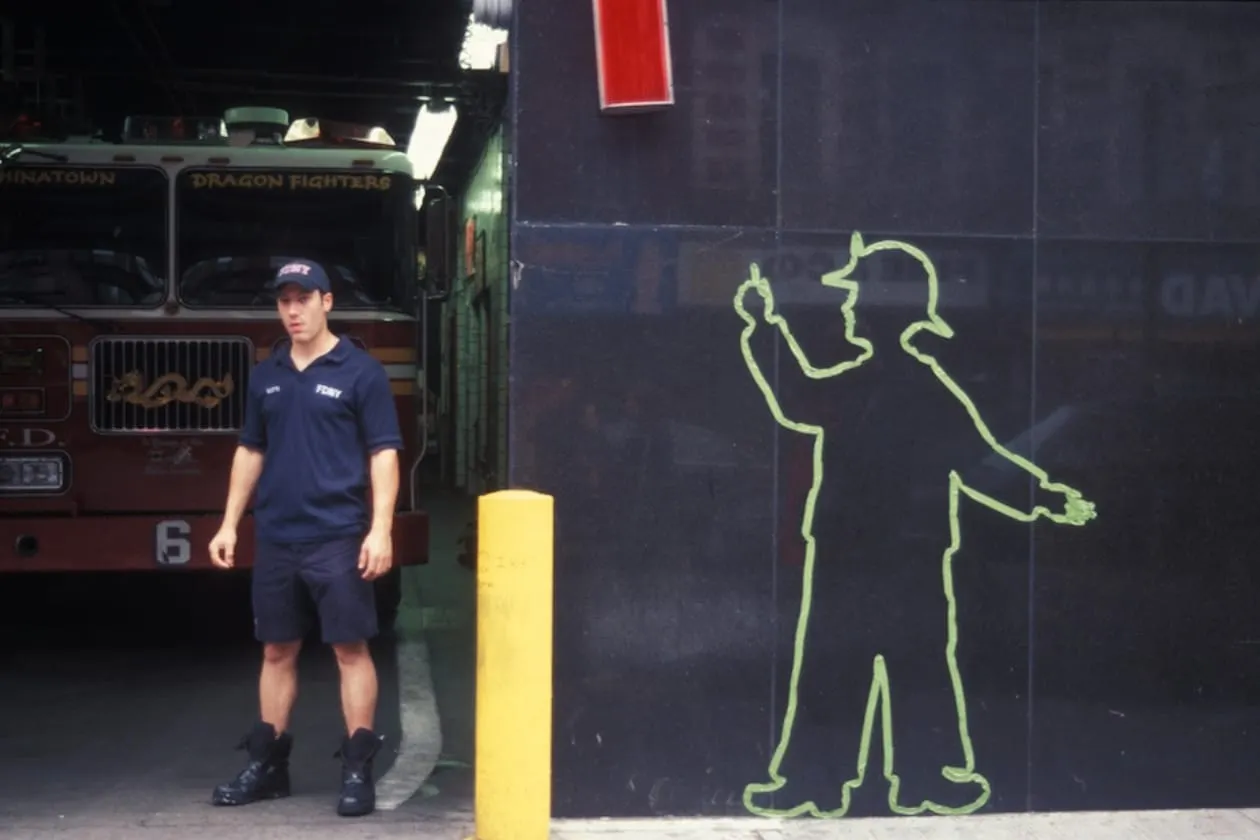
Following the paths of four giant hearts across Manhattan, Tape Art created 490 life-size drawings dedicated to people killed at the World Trade Center. The figures' raised fingers also counted other victims, allowing each drawing to remember several people. The artists meticulously documented the work with photographs, panoramas, and short videos, then built a website so people could visit the memorial after the tape came down.
Jess and I found the whole thing particularly moving and, at the end, I said, "Hey, it's kind of BS that the 9/11 project is gone." That night I reached out to the generic hello@tapeart.com email saying I'd be happy to help bring it back online and give it a permanent home. I sort of figured it would get ignored, but luckily I heard back the next morning!
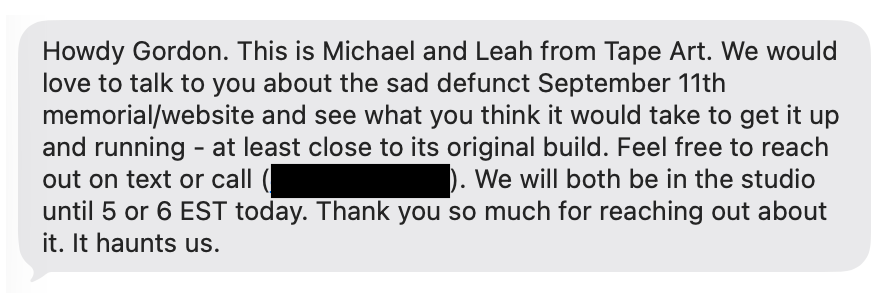
That weekend, we hopped on a call, and Mike and Leah, who run Tape Art today, told me all about the project. The original artists and their collaborators had devoted more than 30,000 volunteer hours over five years to the memorial and its documentation, without grants or outside funding. As Mike later told Untapped New York, "We never drew a person without having spent a considerable amount of time reading about them."
Putting the pieces back together
The original website was an ambitious piece of early-2000s web design. Pages were composed in Photoshop, sliced into tiny image files, and assembled in HTML tables. Much of the written commentary was embedded in those images. Each heart had its own presentation, from interactive QuickTime panoramas to collages that changed as you moved your mouse over them. Behind the scenes, the site also used PHP and a server-side database.
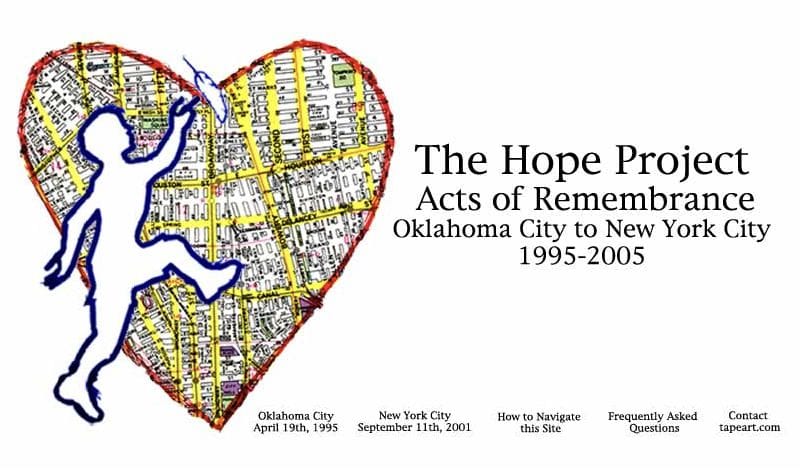
The artists had preserved the files, but the database that connected the pages wasn't included in the archive. As they explained on our call, the connecting tissue between all those web pages was gone. Getting the site back meant reconstructing those connections and making the media work in today's browsers. Some archive folders were labeled "SEE REX FOR H1 PANORAMAS." Rex turned out to be one of the old machines in their studio.
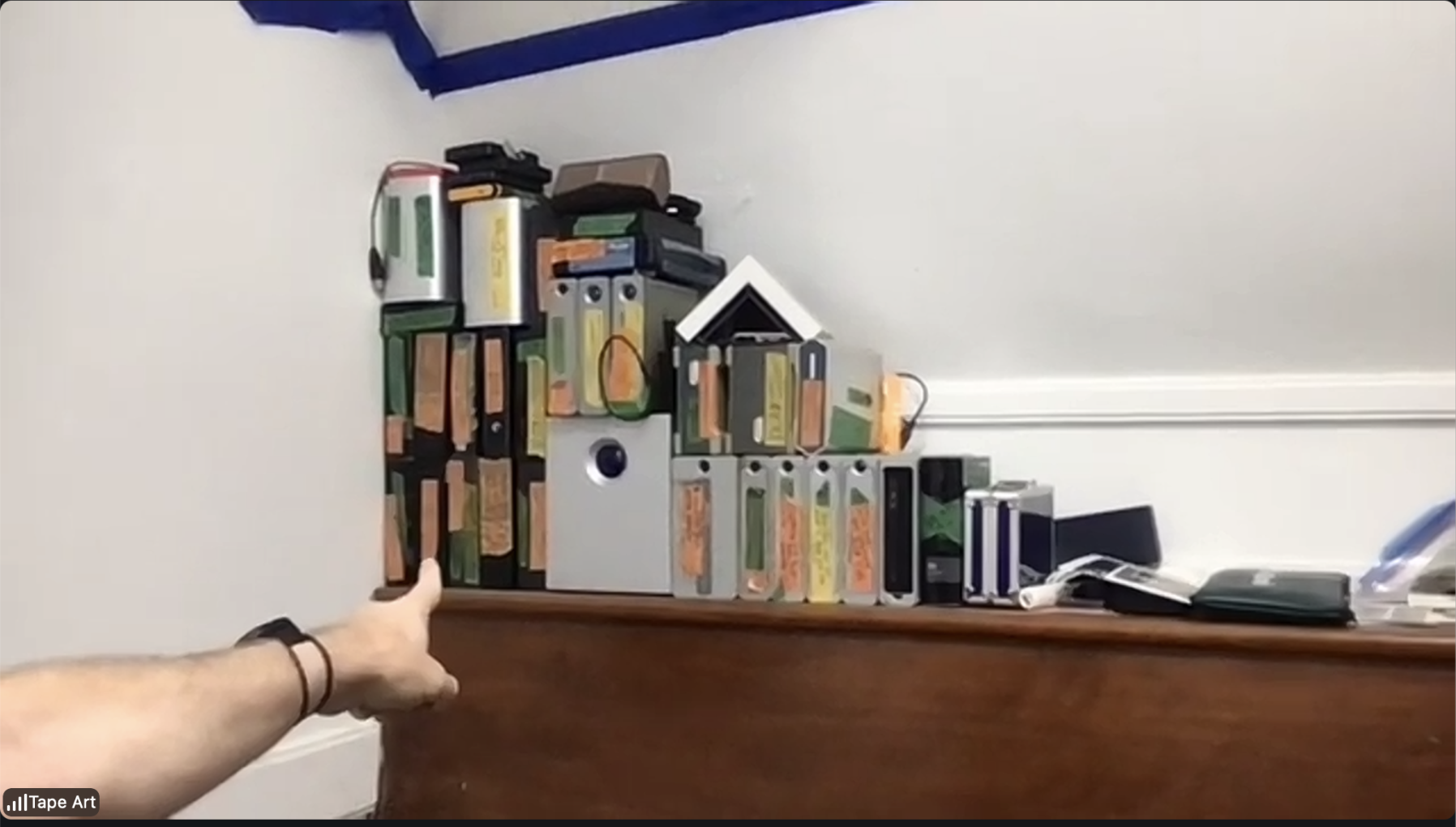
One surprisingly helpful part of the archive was a stripped-down version of the site made for flip phones. It didn't need the original database, so its surviving pages provided a useful index of names, drawings, and locations.
I started with Claude Code for the initial design, including the tape motif, then used Codex for most of the implementation, testing, and site-speed improvements. These AI coding tools helped me write scripts to inventory the files, reconnect names with drawings, reassemble the sliced images, and convert the old videos into formats that work in a browser.
Mike and Leah helped resolve discrepancies and recover source material. The names and dedications were grounded in the archive and conflicting records were tracked in an issues.json file. Corrections from Mike and Leah were logged with the evidence and reasoning behind them.
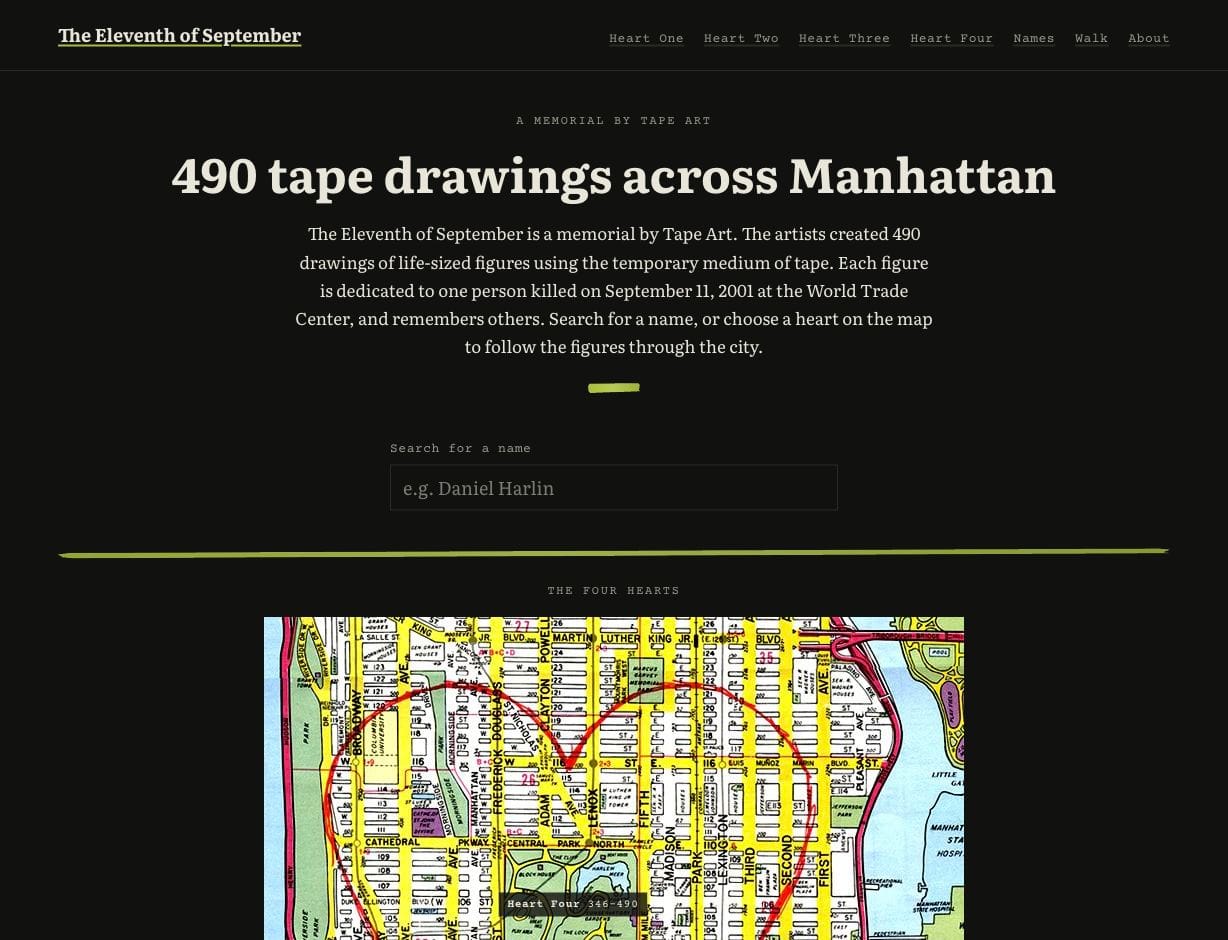
The rebuilt site generates its pages ahead of time, so visitors can explore it without the old database or a QuickTime plug-in. You can search for a name, follow one of the four hearts, and see the artists' photographs and videos together again.
Walking the hearts
One of the best parts of the project was hearing about a dream Mike and Leah had discussed around the 20th anniversary: a walking tour of the hearts on your phone. You could find the nearest drawing, follow the heart's path, and look at the original photographs while standing in the same place. So much of the city had changed that even the artists sometimes needed the old panoramas to orient themselves.
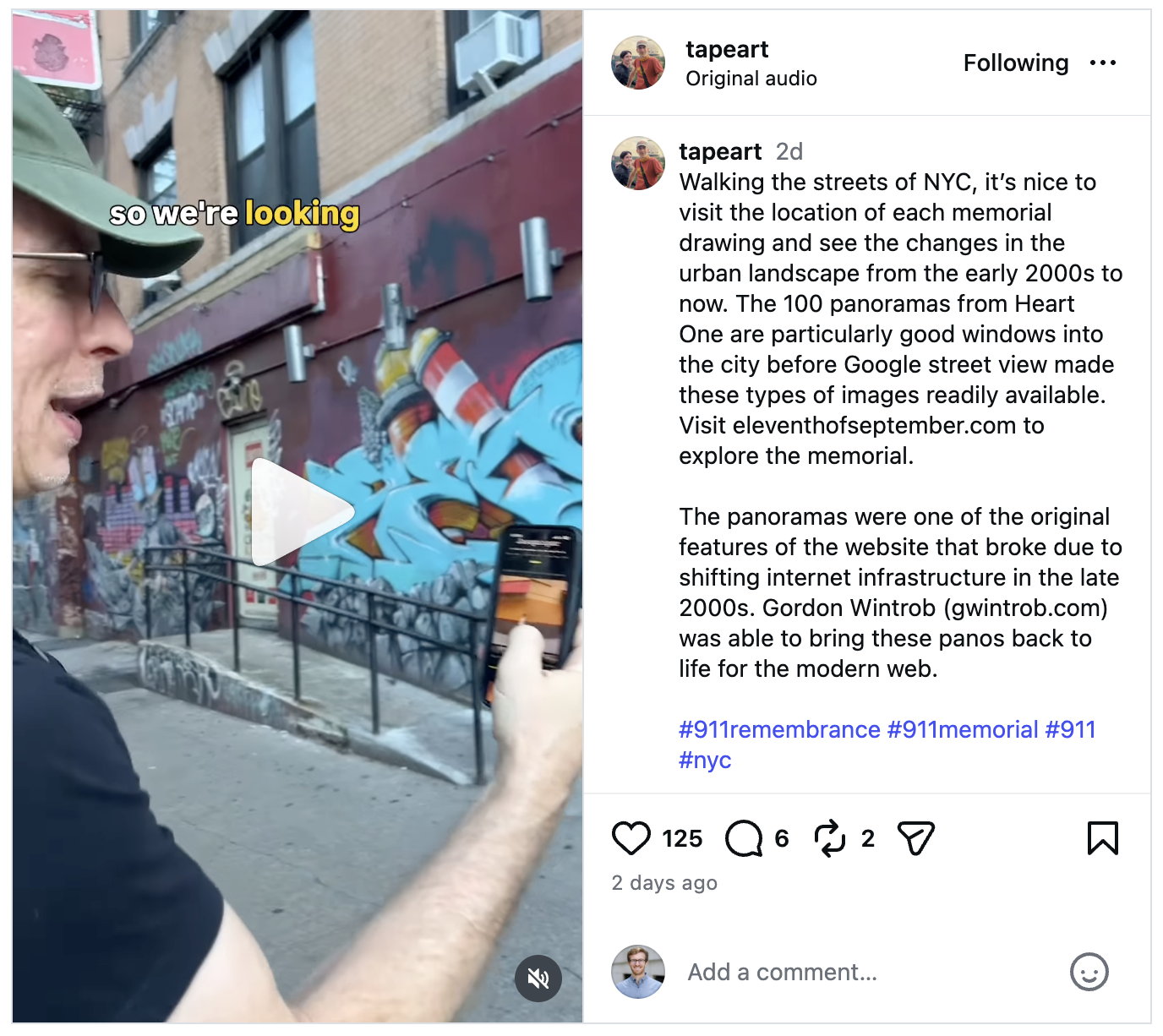
The new Walk feature brings that idea to life. If you're in Manhattan, you can find nearby drawing locations and walk from one to the next, with the names, photographs, and videos along the way.
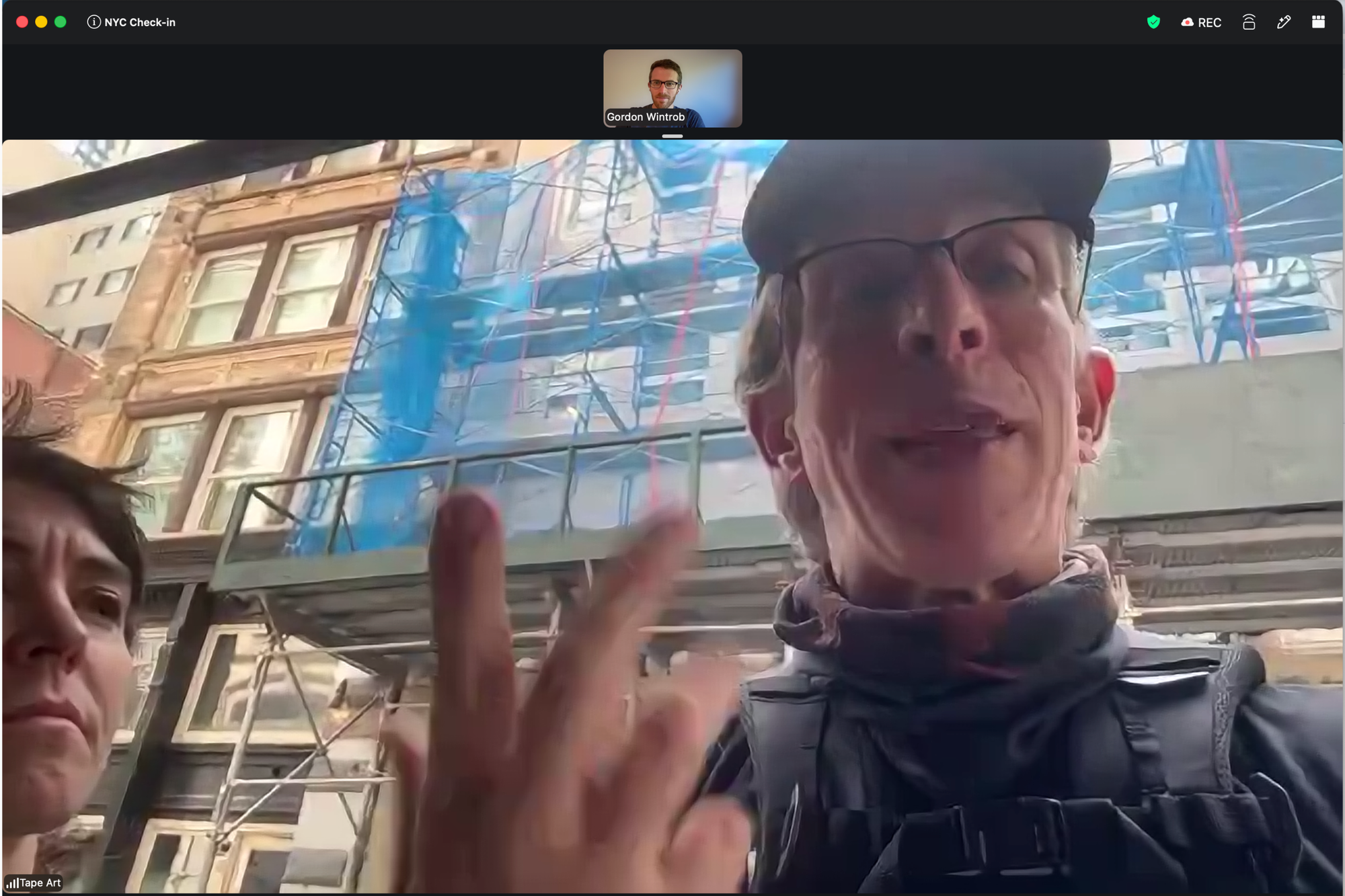
Mike and Leah drove to New York City to test it and called me from the street. They quickly found things I couldn't see from my desk: how the map drew straight lines through buildings and opening a drawing made it too easy to lose your place in the walk. Their feedback led to easier-to-follow directions and improvements in the site navigation.
Wrapping up
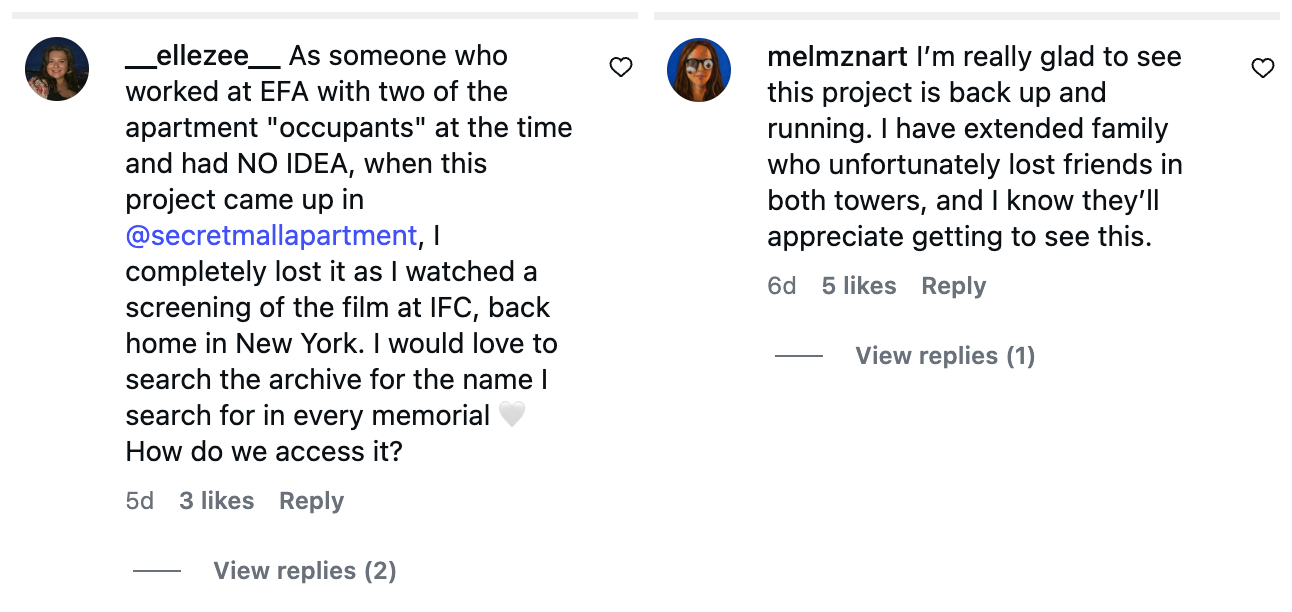
The Eleventh of September site was back online in time for the 25th anniversary of September 11, and the site had more than 2,000 unique visitors that day. For me personally, it was well worth the nights and weekends to know that family and friends who lost loved ones that tragic day could access the memorial.
It was also a joy to work with Mike and Leah, who clearly pour their heart and soul into everything they do. THANK YOU! And finally, it's nice to highlight a positive, creative use of AI where it augments human experience and connection.
Press coverage
Thanks to the publications that have helped people rediscover The Eleventh of September: